
Polyaspartic Garage Floor Coatings in San Diego County
Polyaspartic is a fast-curing coating from the polyurea family. It's UV-stable, so it resists the yellowing epoxy can show in sunlight, which makes it a strong choice for garages that sit open to the sun. We install polyaspartic floors across Oceanside and North County San Diego.
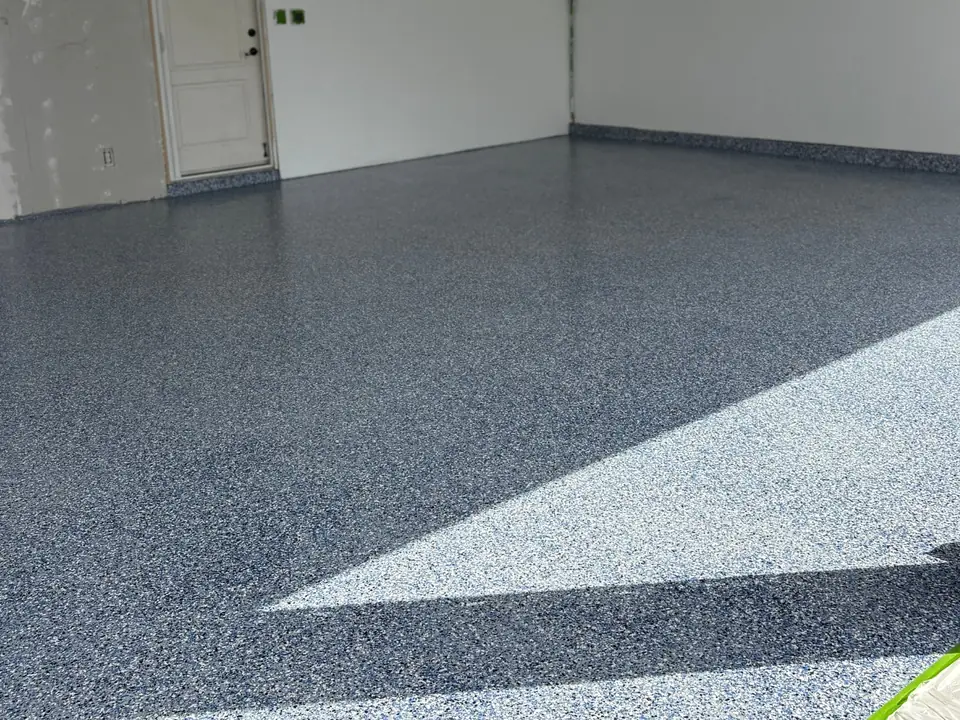
Polyaspartic is the newer option for garage floors. It's used on its own and as the clear topcoat over a flake floor, and it has two big advantages over standard epoxy: it cures faster, so your garage is out of use for less time, and it is UV-stable, so it resists yellowing where the sun reaches it. Like every coating we install, it only performs if it's bonded properly, so the work starts with grinding and cleaning the concrete and a primer to secure the bond.
- 15 Year Warranty
- Fast Installation
- Licensed & Insured
- Free Consultation
- 5.0 on Google · 15 reviews
What’s included
- UV-stable: resists yellowing, even in direct sunlight
- Fast curing, so you get your garage back sooner
- Flake, quartz or solid colors with a matte, satin or gloss topcoat
- Resists hot-tire pickup, oil, salt and harsh chemicals
- Grinding, cleaning and a primer for a strong, even bond
At a glance
Cure time
- Fast Installation Most projects are completed in just 1 day, minimizing downtime and inconvenience.
- Polyaspartic coatings deliver extreme durability and stunning results in just 24 hours.
- Enjoy a sleek, UV-stable surface that cures in as little as 24 hours and lasts for decades.
- Floors cure fast—typically within 24 hours—and undergo final quality checks.
- Fast-curing, UV-resistant coatings that cure in hours, not days.
Lifespan
- Lasts 15–20 Years or More Outperforms epoxy with a longer lifespan and better retention of finish and strength.
- Specialized primers ensure adhesion and extend coating longevity.
Sun and weather
- UV Stable No yellowing or fading, even in garages exposed to direct sunlight.
- All-Season Performance Performs well in hot, cold, and humid conditions—ideal for any climate.
Upkeep
- Virtually Maintenance-Free Sweep or mop with a gentle cleaner. Stain-resistant and easy to keep spotless year-round.
What a polyaspartic coating is
Polyaspartic coatings belong to the polyurea family of coatings. They were developed for demanding surfaces and have become popular for residential garages because of two properties: they cure faster than epoxy, and they are UV-stable, so they resist yellowing in sunlight.
In a garage, polyaspartic is used in two ways. It can be the whole system, built up in layers in the color and finish you choose, or it can be the clear topcoat over a flake floor, where it takes the wear and stays clear instead of ambering the way an epoxy topcoat can.
Fast curing cuts both ways: the material sets quickly once it's mixed, so it has to be applied quickly and evenly. That's why preparation and experience matter even more than with epoxy, and why we take the prep stage as seriously as the coating itself.
Why choose polyaspartic
It stands up to the sun. If your garage door stays open on sunny afternoons, the floor takes a lot of UV. Standard epoxy can amber over time in UV light; a polyaspartic coating is built to stay clear.
It saves time. Because it cures faster, the garage is out of use for less time than with a comparable epoxy system.
It's tough. Polyaspartic resists hot-tire pickup, impacts, oil, salt and harsh chemicals, and the surface is non-porous, so dirt and fluids don't soak in.
It's easy to keep clean. Sweep it and mop it with a gentle cleaner, and it stays looking new. You can pair it with flake, quartz or a solid color, and pick a matte, satin or gloss topcoat.
What to expect from start to finish
- 1 Surface Preparation
- 2 Primer Application
- 3 Polyaspartic Coating
- 4 Cure & Final Inspection
First comes a free visit. We look at your concrete, ask how the garage gets used and how much sun it sees, and recommend a system: full polyaspartic, or a flake floor with a polyaspartic topcoat. You'll get a clear quote.
We'll need the garage empty for installation. We grind and clean the concrete, make any repairs, and apply a primer to secure the bond. The polyaspartic layers go down in the finish you chose.
When we're done, we do a final quality check with you. Polyaspartic cures faster than epoxy, and we'll tell you exactly when you can walk on the floor and when you can park on it.
Questions & Answers
Is polyaspartic better than epoxy?
For a start, it cures faster and it resists yellowing in sunlight. Epoxy is still a proven, cost-effective choice for many garages. We'll recommend one for yours at the estimate.
How soon can I use my garage?
Sooner than with a comparable epoxy system, because polyaspartic cures faster. We'll give you the timing for your floor once we've seen it.
Will it yellow if my garage door is open all day?
Polyaspartic is UV-stable, so it resists the yellowing that standard epoxy shows in sunlight.
Can polyaspartic go over a flake floor?
Yes. It's often used as the clear topcoat on flake systems, where it protects the flakes and resists yellowing in sunlight.
More answers on our garage floor and storage FAQ.
Glossary
- Polyaspartic
- A fast-curing coating in the polyurea family, used as a full system or as a clear topcoat.
- UV-stable
- Resists the yellowing and fading that sunlight causes in some coatings.
- Cure
- The chemical reaction that hardens a coating; it continues after the floor feels dry.
- Primer
- The first coat, which secures the system to the concrete.
Related services
Flake Systems
A flake floor has decorative vinyl flakes broadcast into a base coat and sealed under a clear topcoat.
Epoxy Flooring
A bonded epoxy coating turns a stained, dusty concrete slab into a bright floor you can sweep and mop.
Metallic Finishes
Metallic epoxy uses special pigments that are worked into the coating while it's wet, so the finished floor has depth and movement, and no two floors are alike.
Get a free polyaspartic estimate
Call or text (760) 712-6561, or send us a message, and we'll set up a time to look at your garage. The estimate is free.